

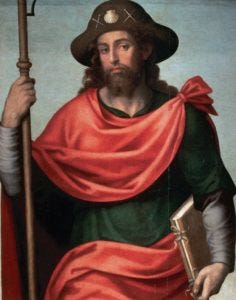
When I think of James, the simple fisherman turned disciple, then preacher, arising from the cave where he had been quietly resting for 750 years to lead the Christians to battle, I wonder if anyone took him aside to fill him in on the amazing transformation that Christianity had gone through during those years.
Early Christianity had been a grass-roots, often women-sponsored religion.
Rather than a loosely organized grass-roots religion where many women sponsored and hosted “house churches,” females were blocked, starting in the first centuries, from leadership roles. Although some female names in strong roles still exist in the New Testament, like references to Lydia (Acts 16:11-40), Nympha (Col. 4:15) and Mary, the mother of John Mark (Acts 12:12), some scholars believe that many of the women’s names from that early time were changed to the masculine form to erase their strong involvement in the formation of the church, such as Junia/Junias, Apollonia/Apollonius (McDonald lecture notes, Junia Project)
Martyrdom
Although they were excluded from official roles, they were not excluded from martyrdom. Around CE 198, a 22-year-old woman, Perpetua, had a spiritual awakening during a dream. She was imprisoned for sharing her faith and then led a resistance from prison in a group mostly of clergymen. They were all killed, but Perpetua and her servant, Felicitas were thrown into the pit with the gladiators to be speared and beheaded for the entertainment of the crowd at the stadium.
The Romans that had beheaded him and martyred many of his friends and hundreds more in the centuries to follow had gradually converted to Christianity, especially after the emperor, Constantine, who ruled from 306-337 took the step. Some say a dramatic dream convinced him to turn to Christianity, while others believed that he could see that Christianity could be a unifying force throughout the entire empire.
Christianity Adopted Many Elements from the Roman Courts
Christianity organically morphed into a truly Roman institution, with a hierarchical imperial governmental structure with centralized leadership, and similar architecture, clothing styles, days of worship and holidays and even rituals, such as the use of incense.
Papal authority was modeled after that of the emperor, with territories divided into geographical units of diocese and parishes similar to the Roman political units.
Since early Christians mostly met in hiding at the time James traveled to Spain and probably had never visited Rome, I would have like to have seen his face as he stepped into his first cathedral. The long architectural form known as a basilica, with pillars in the front, was modeled after imposing judicial buildings. The priestly vestments were designed after the fashions of wealthy Roman men. The use of candles and incense and even “many elements of the liturgy were adapted from imperial court ceremony.” (Molloy) Even up until the Second Vatican Council (1962–1965), mass was still conducted in Latin.
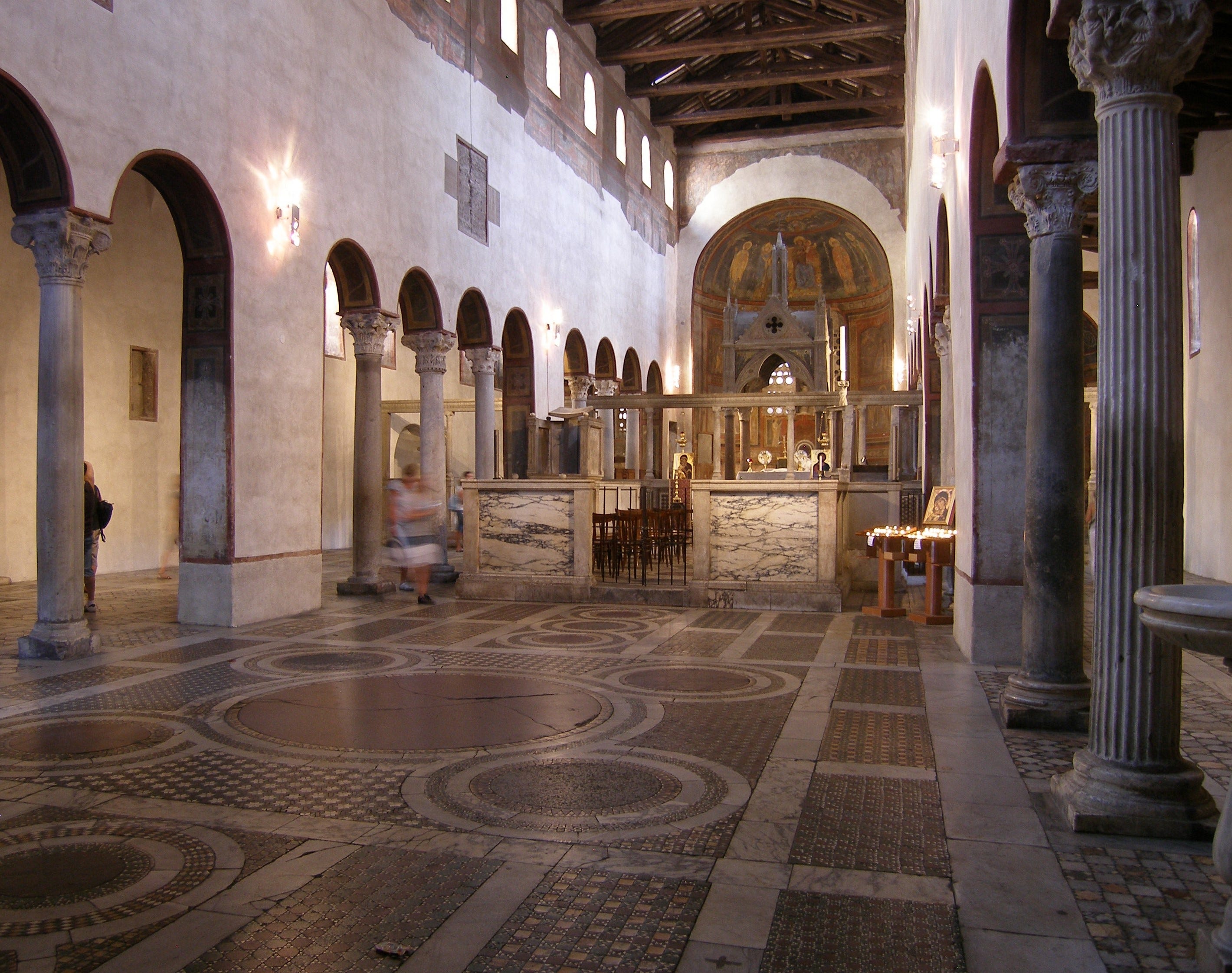
Christians had continued to live in hiding and terror for the first 2 centuries of the early church, sometimes existing in dark catacombs, a network of tunnels under Roman streets. Now, the new targets were those who resisted conversion.
Day of Worship Moved from Jewish Sabbath to Sunday.
Soon after the Crucifixion, the official day to worship was moved from the longstanding 7th day Sabbath of the time of Moses and the 10 commandments to Sunday, the traditional day for Romans to worship the Sun, Besides being convenient for the new Roman converts, the previously Jewish converts were also ready for the shift to a new day to leave Judaic traditions behind, making the transition remarkably smooth.
The earliest Christians had many debates about which Jewish tradition should still be honored, and which should be let go. A closer look was taken at the 4 Commandment which states that its intent had been to rest after creation and considering each day of creation to last one thousand years, some saw that there was finally closure and now was the time for new life on the 8th day. After such challenging times, most believers were ready for an era of rebirth and new beginnings and since Jesus’ resurrection was on Sunday, it made sense to now worship and celebrate on the 8th day.
Romans often thought of the Jewish day of rest and no work as idleness. Christians that were slow to relinquish previous traditions were called “Judaizers.” Since Sunday coincided with the Roman day of veneration of the Sun God, it was easy to fit in with the rest of society’s work schedule. So, the new arrangement worked well for a variety of reasons and for many people.
December 25 designated as Christ’s birthday.
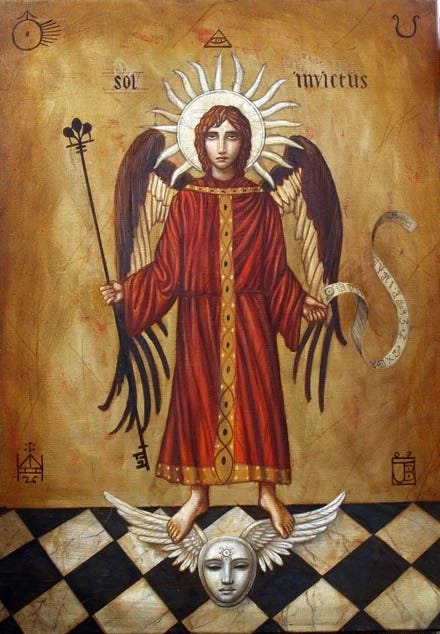
And, although Jesus was born during the springtime, December 25 was designated as the day to celebrate his birth, coinciding with the celebration of the Dies Natalis Solis Invicti, a few days after the Winter Solstice. Many images of Jesus started showing rays of sunlight extending from around his head, similar to the image on coins of the emperor, as Sun God.
Christianity Proclaimed the Official Religion of the Roman Empire.
Constantine encouraged church leaders to get more formally organized and to define the official doctrines, disciplines and rituals uniformly. Three hundred eighteen Church Fathers met in Asia Minor (now Turkey) in 325 at what was termed, the Council of Nicaea. After sometimes fiery debate, the Nicaean Creed was adopted as the foundational profession of faith, and Christianity was soon proclaimed the official religion of the Roman Empire.
Sources
Lecture notes, Iliff School of Theology, Dennis McDonald, PhD, 1994),
https://juniaproject.com/more-than-footnotes-part-1-women-early-church)
Experiencing the World’s Religion: Tradition, Challenge, and Change, 2008, Michael Molloy, p. 375.
Your details and the back story (history) is wonderful prep for learning about your Camino!